The Ocean Park Story (Part 4)

I. Acting on the opportunities – Special Events
Three principles have clearly guided Ocean Park since its inception. Provide to the public elements of Conservation, Education, and Entertainment.
All the animals and wildlife under the Park’s care were representative of its conservation efforts. Exhibited in their properly designed habitats and supported by their conservation messages, they were the ambassadors to promote and support conservation. Their stories help to educate the public on the role humans play in making sure their species survives and flourishes for years to come, especially supporting vulnerable and endangered species like the giant panda. However, conservation and education, by definition of their purpose, cannot generate revenue. The park must generate revenues elsewhere to support the conservation and education efforts.
Entertainment, which encompasses the rides, attractions, and shows, is the main driver of attendance and revenues. Building strong support and patronage from the local market, as well as that of major tourism markets, will grow and secure business for the park. The local and tourism markets were the main focus of sales and marketing strategies and actions.
Attendance is everything. Without it, there is no park and no one to educate on conservation. We have always said, unless the turnstiles turn and people come to the park, there will be no park. Whatever the park does, it has to sell a ticket and drive attendance.
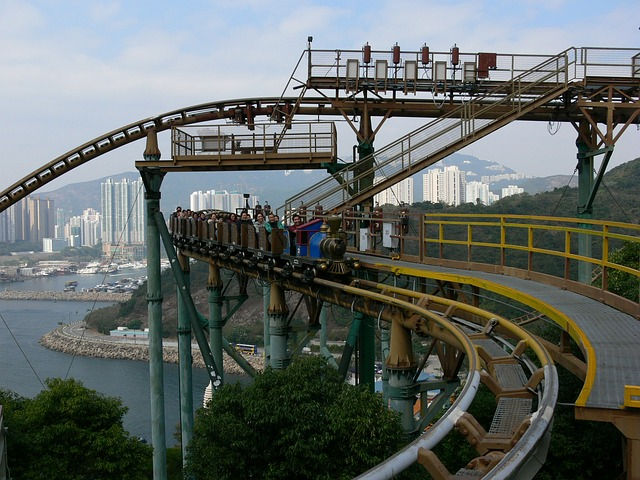
Before my arrival in June 2000, a new ride was purchased at the park. It took some time to install, and it finally opened in 2001. Named “The Abyss, Turbo Drop,” it was full of thrills and cost HK$10 million to buy and install, plus months for government approval. It was thought that this would be an answer to its financial woes.
An investment in a new ride did not generate the desired return. The cost was too high, and the time needed for installation and implementation was too lengthy. I remember sitting in an executive meeting where we looked for alternatives with less expense, quicker delivery, and better returns. Certainly, the park could not continue to sustain the high cost of purchasing another ride and waiting months and years for it to be installed and operational. What other options were available? A few of us suggested “Special Events,” something with less capital cost, quicker implementation, and better potential for driving attendance and revenues.
The definition of special events was not complex, but still, it required clarification to some. An event is something that happens, especially with some importance. A special event is something that happens for a limited period of time and for a particular activity. The park could organize, implement, and manage several special events throughout the year. Each special event would provide another reason to visit. It could be centered around certain holiday seasons. The capital costs would be significantly less than a new ride, and implementation would be much quicker. Additionally, the theme can change regularly so that the product is always NEW. The bottom line is lower cost, and pushing a new product out faster to generate attendance and revenue. Seems to be a winning combination.
Next, the birth of Halloween.


Comments